HLP 46 Zinc-Free Hydraulic Oil

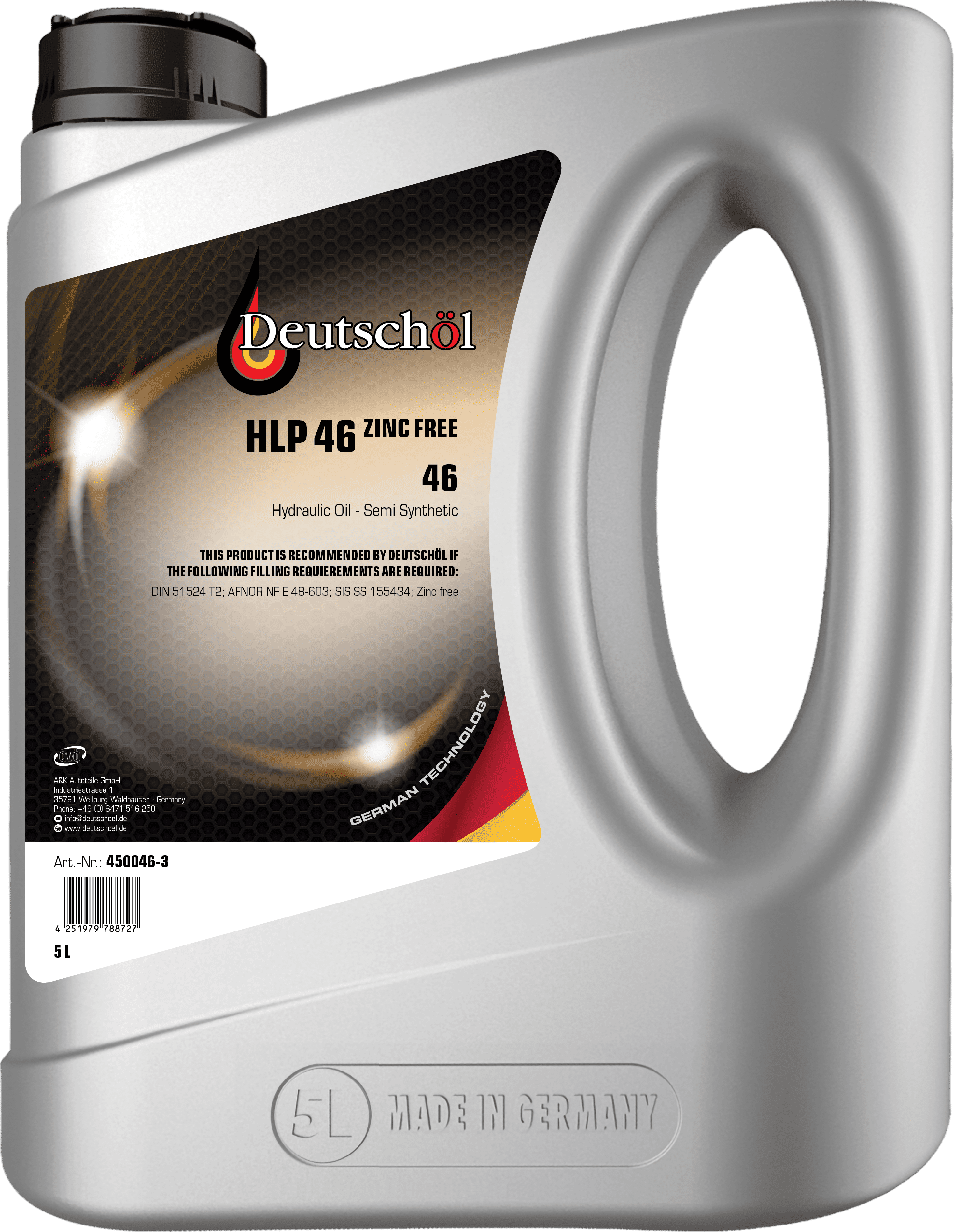
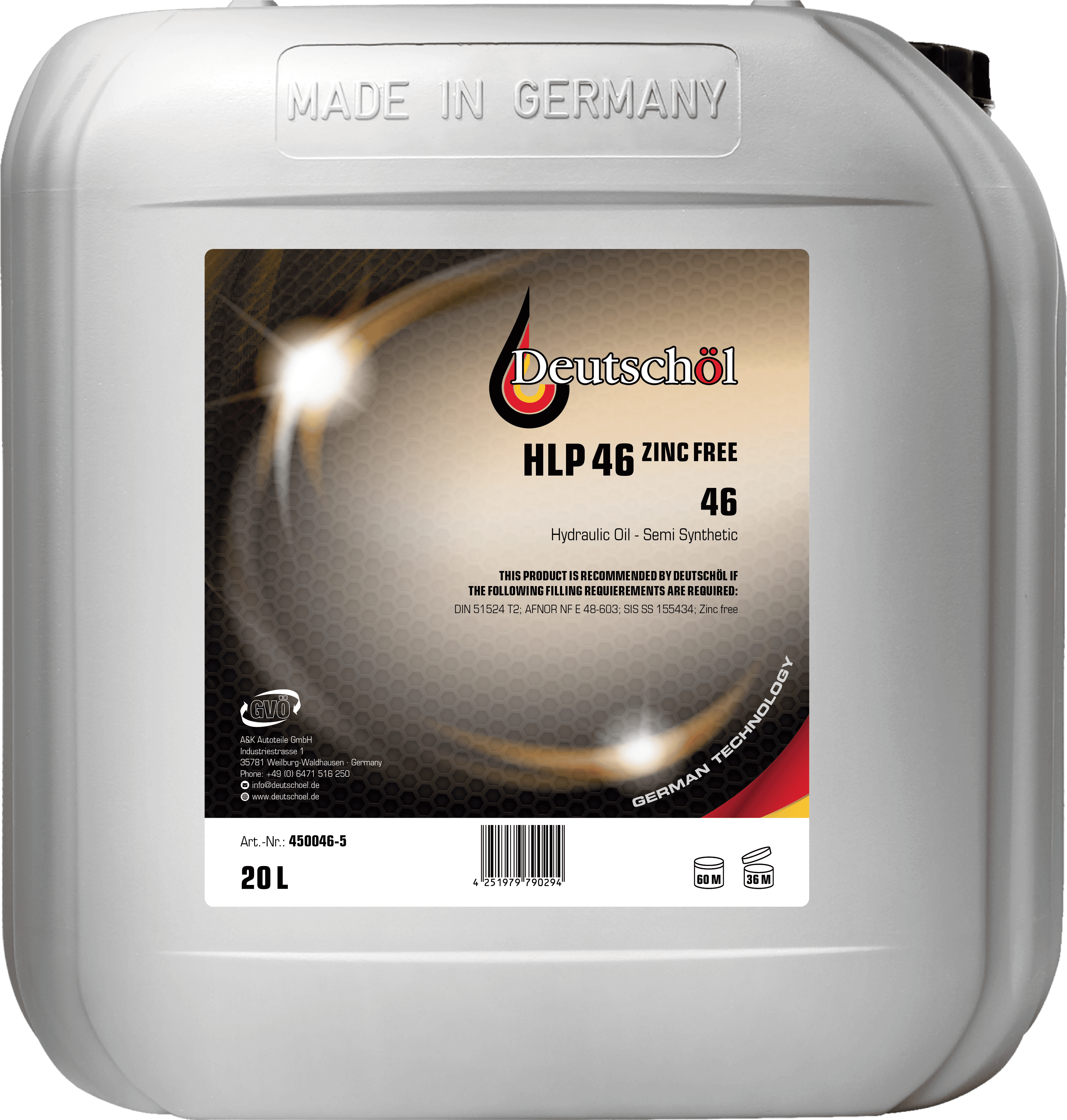
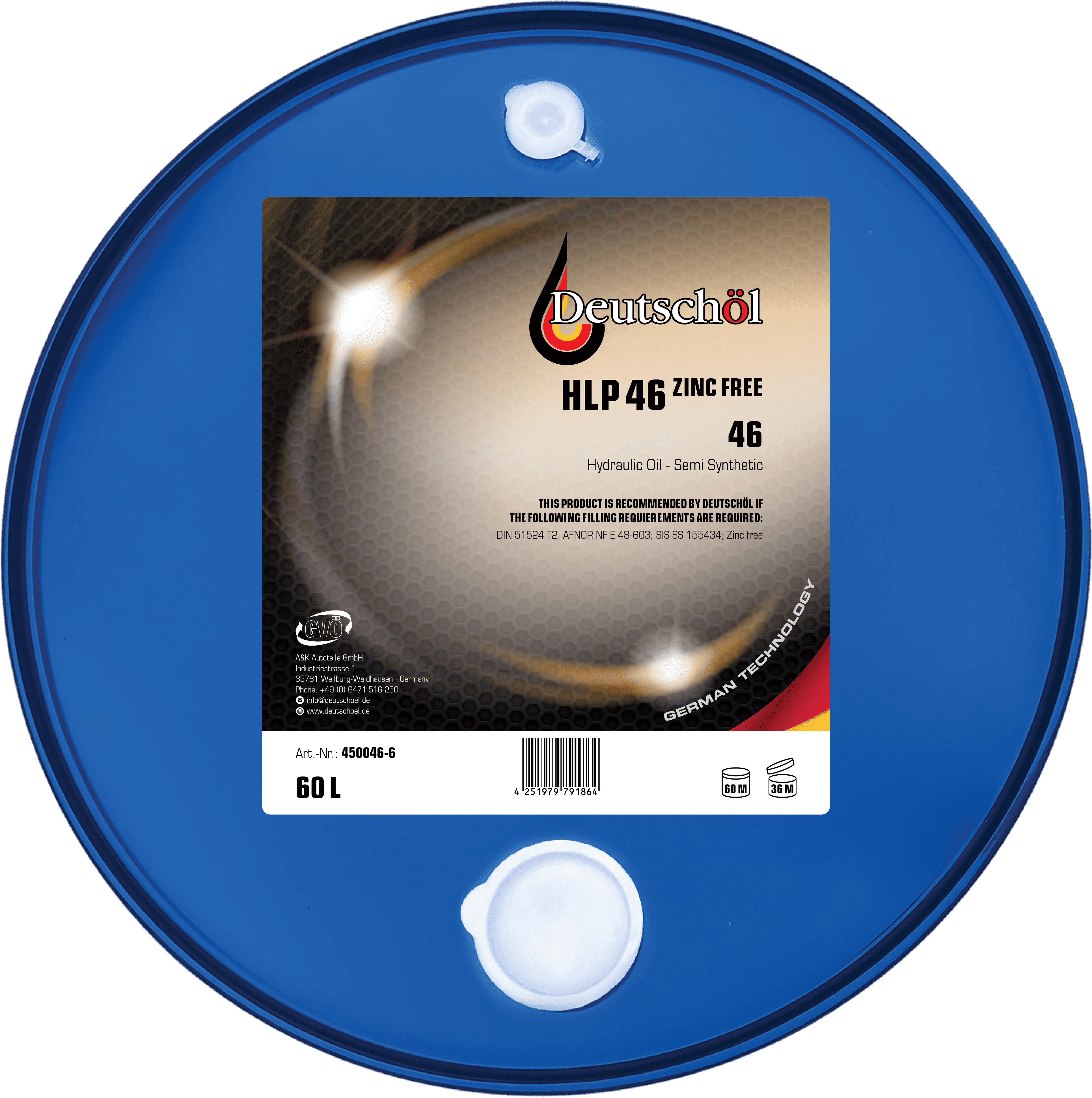
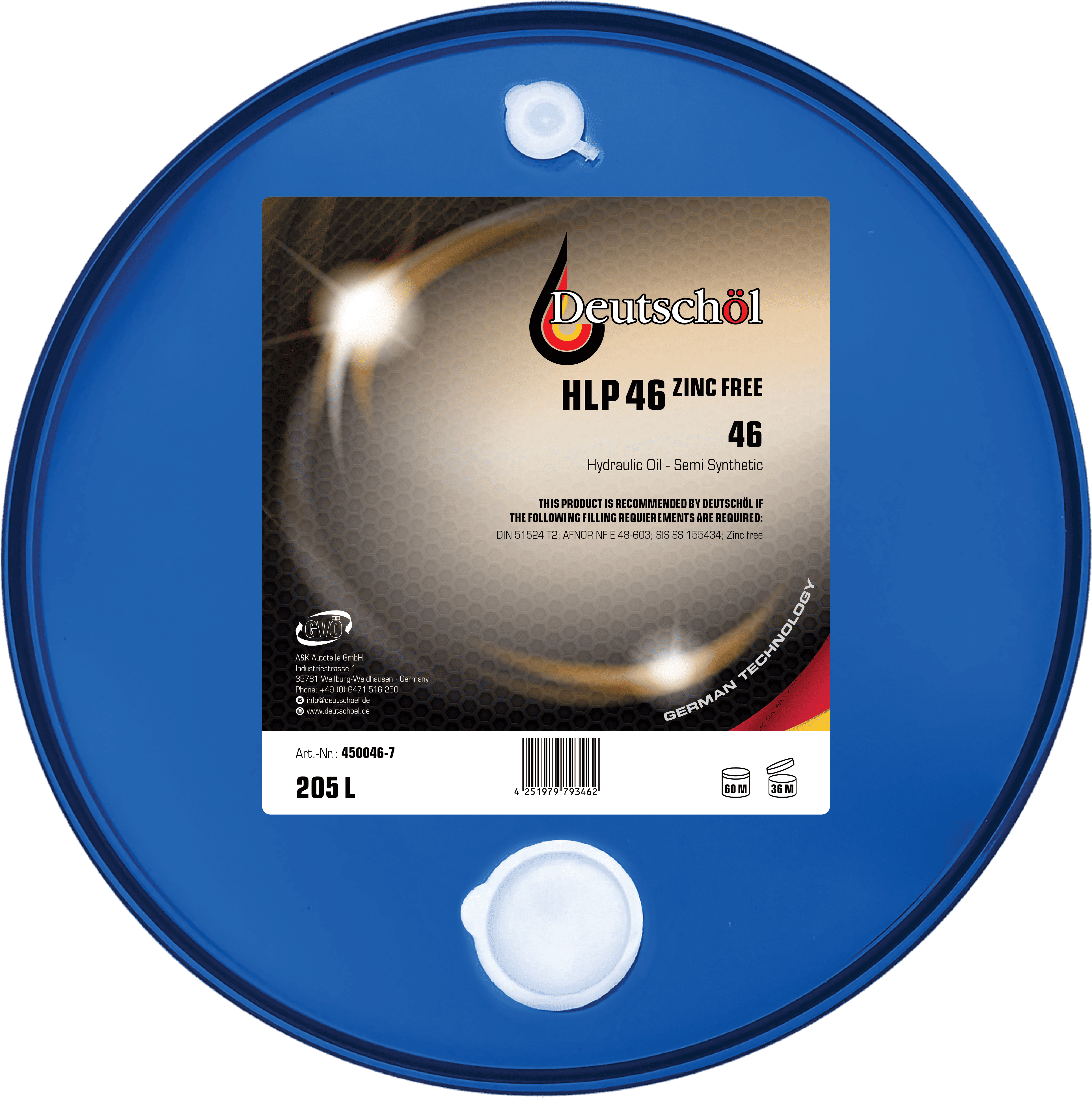
HLP 46 ZINC FREE is a semi-synthetic ISO VG 46 lubricant for hydraulic drives that require zinc-free additive technology.
Its performance profile centres on wear protection, oxidation stability and dependable viscosity behaviour while meeting DIN 51524-2, AFNOR NF E 48-603 and SIS SS 155434. Verify the system's additive chemistry and fluid-conversion procedure before changing from a conventional zinc-containing oil.


A zinc-free HLP 46 fluid for compatible systems
HLP 46 ZINC FREE is intended for hydraulic systems that call for ISO VG 46 viscosity and a zinc-free HLP fluid. It provides the wear, oxidation and corrosion performance required by the standards listed for the product.
Suitable applications
- Industrial hydraulic systems specifying ISO VG 46
- Mobile systems requiring DIN 51524-2 HLP performance
- Applications covered by AFNOR NF E 48-603
- Systems referring to SIS SS 155434
- Equipment requiring a zinc-free hydraulic formulation
Match both grade and chemistry
Confirm that ISO VG 46, HLP performance and zinc-free additive technology are all required. Do not choose the product solely by viscosity or mix it with zinc-containing hydraulic oil without a compatibility review.
Benefits of HLP 46 ZINC FREE
Zinc-Free Additive Technology
Hydraulic Wear Protection
Oxidation Resistance
Corrosion Protection
Specifications and Performance Standards
Typical Technical Properties
Available Packaging Sizes
Protecting Hydraulic Systems During Oil Changes
Before changing hydraulic oil, identify the fluid currently in service and confirm compatibility with the replacement. Mixing can alter water separation, detergency, seal behaviour and additive performance even when both products share the same ISO viscosity grade.
Inspect the reservoir, filters, breathers, hoses and cooling surfaces. Correct sources of water, dust or process-fluid contamination before adding fresh oil. Use clean transfer equipment and filter the incoming fluid when the system procedure requires it.
After refilling, bleed trapped air where applicable and monitor pressure, temperature, noise, filter condition and leakage. A rapid change in these indicators can point to contamination, incorrect viscosity or an incomplete changeover rather than a problem that more oil will solve.
Why Choose Deutschöl?
German Lubricant Expertise
Performance and Protection
Recognised Standards and Specifications
FAQs
Need Help Choosing the Right Product?