HYD BIO 46 VGE Biodegradable Hydraulic Oil

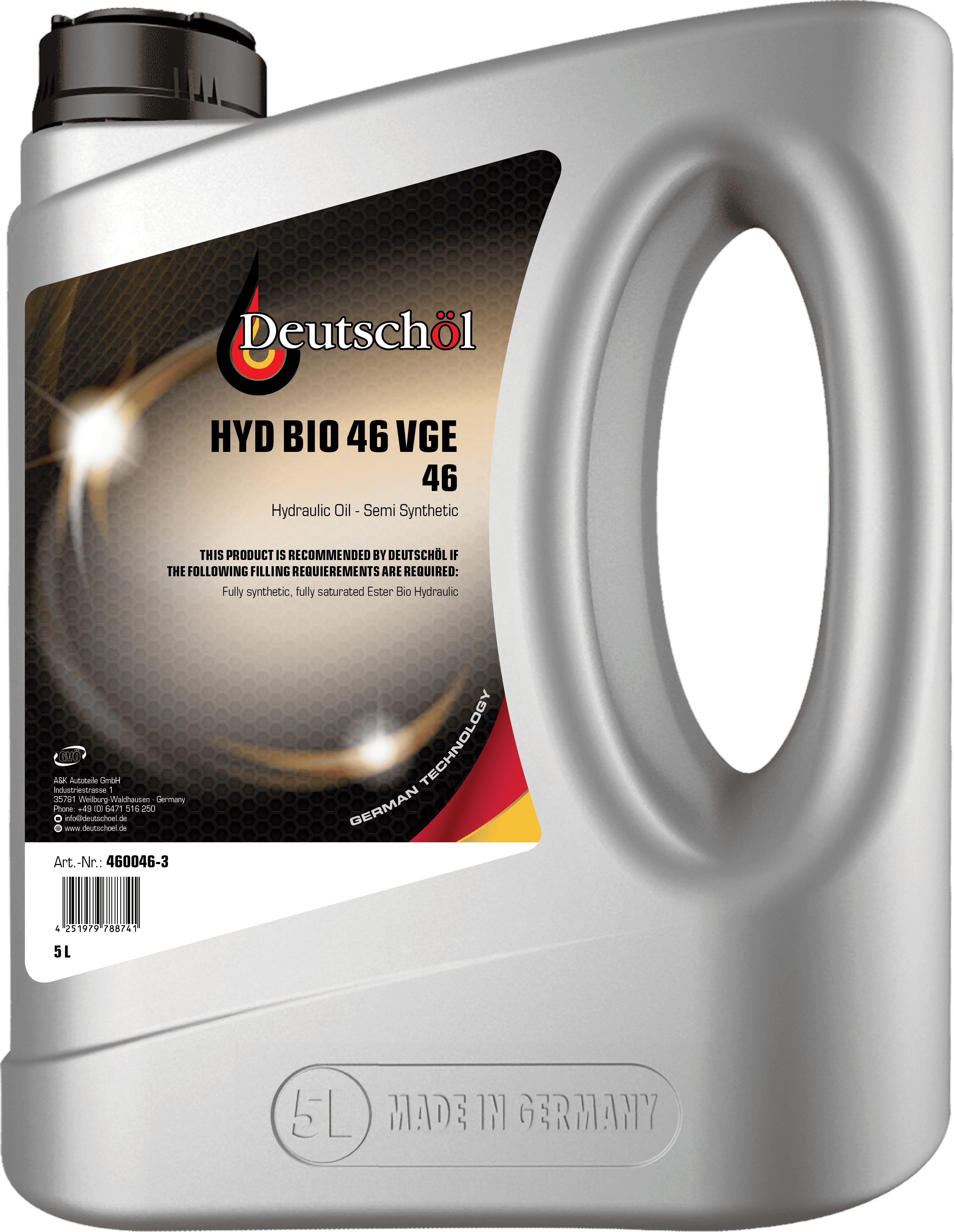
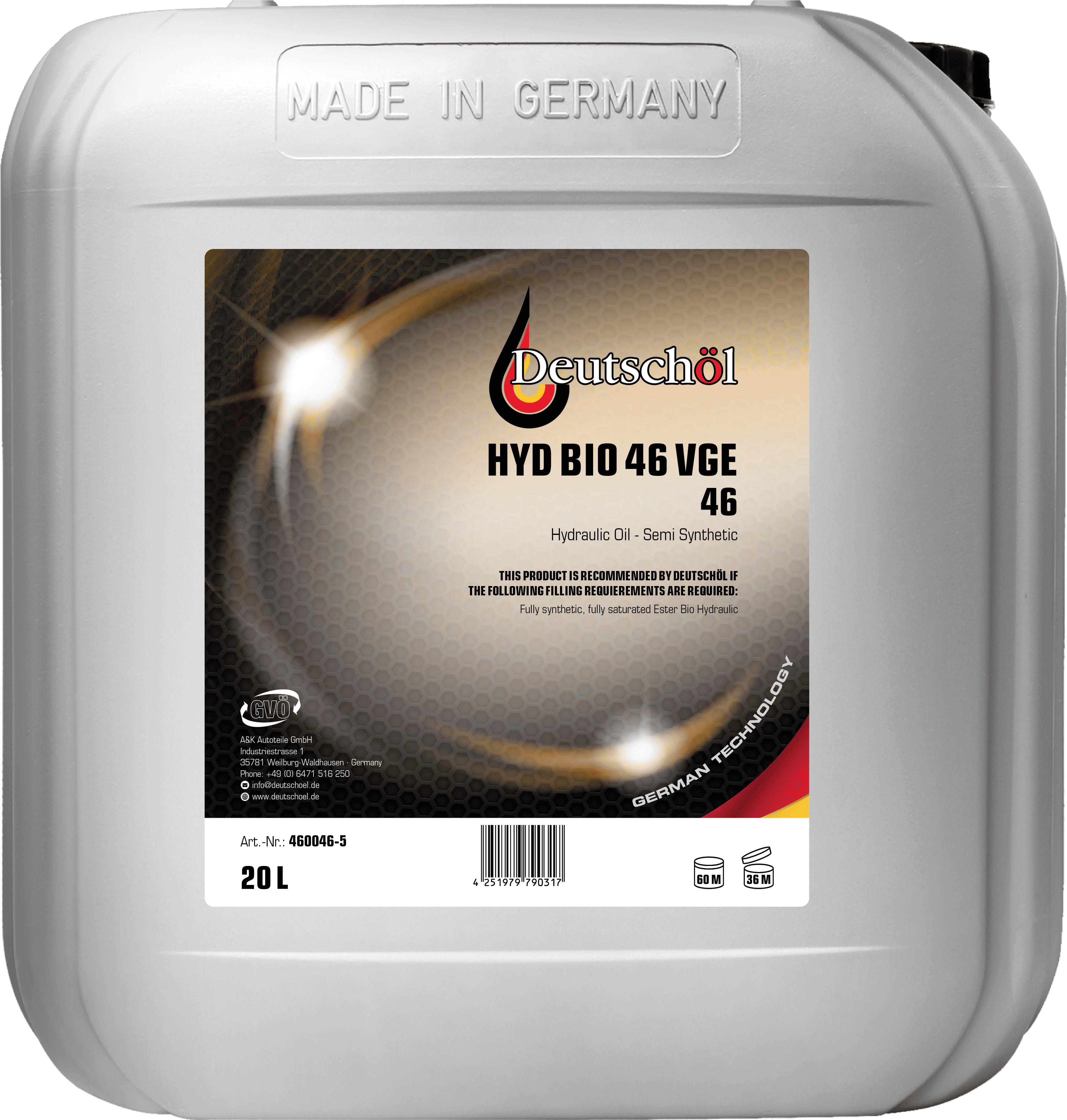
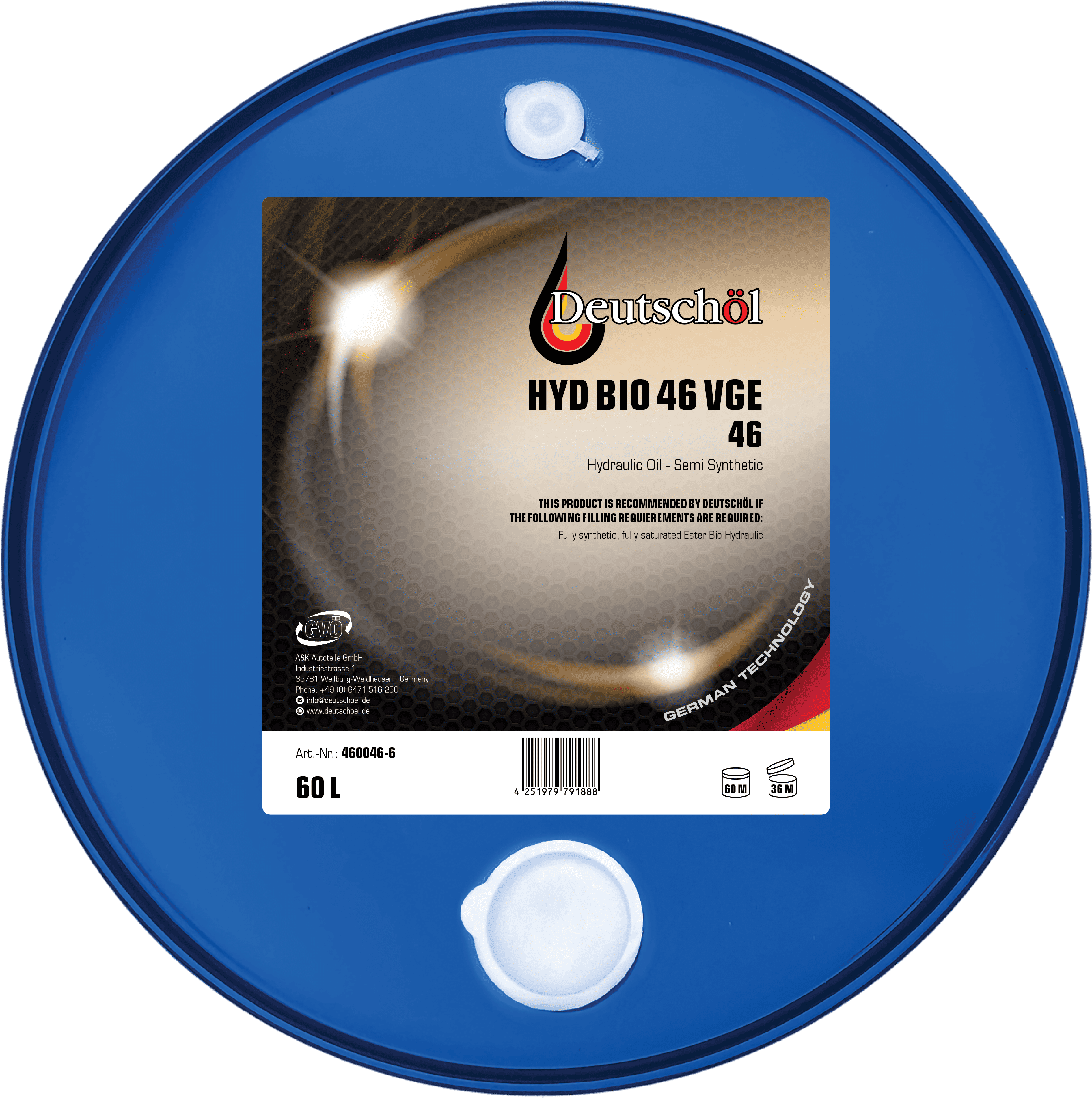
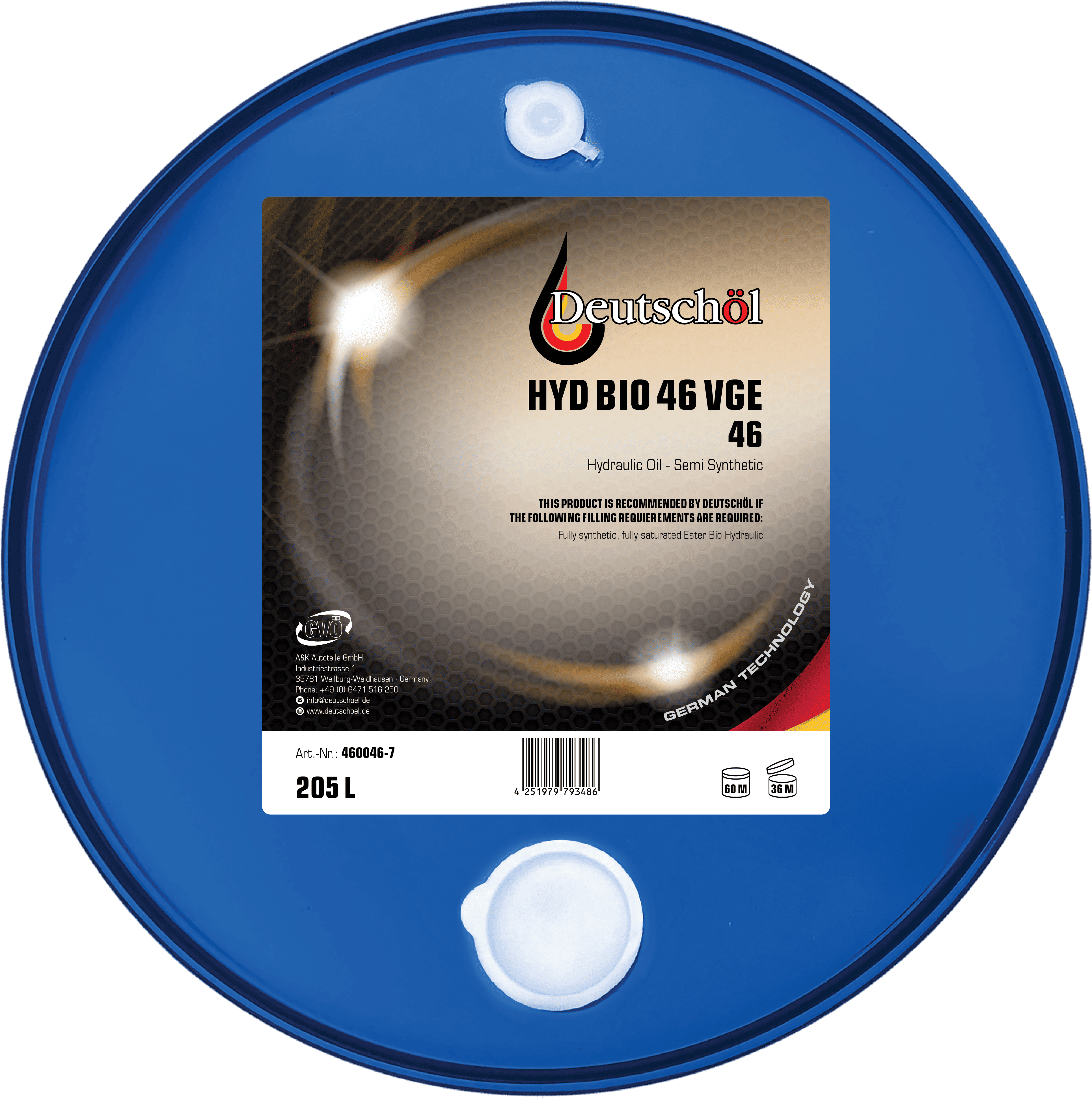
HYD BIO 46 VGE is a readily biodegradable ISO VG 46 hydraulic fluid formulated with saturated synthetic esters for machinery working where leakage could affect soil, groundwater or wastewater.
Its technical profile combines year-round low-temperature performance, oxidation and corrosion resistance, OECD 301 B biodegradability and FZG scuffing load stage 12. It is intended for compatible forestry, construction, agricultural and stationary hydraulic systems requiring HEES 46.


Biodegradable hydraulic protection where leakage matters
HYD BIO 46 VGE is intended for mobile and stationary hydraulic systems where escaped fluid could enter soil, groundwater or wastewater. It suits equipment requiring an ISO VG 46 HEES fluid based on saturated synthetic esters.
Suitable applications
- Forestry machinery operating in environmentally sensitive areas
- Construction equipment working near soil or water
- Agricultural hydraulic systems
- Stationary and mobile systems specifying HEES 46
- Cold-weather applications within the equipment manufacturer's limits
Plan the changeover carefully
The product is miscible with HEES 46 hydraulic oils, but mixing changes the technical properties of the finished fluid. Drain and flush the system when converting, and confirm seal compatibility and the required environmental classification.
Benefits of HYD BIO 46 VGE
Biodegradable Synthetic Ester
High Scuffing-Load Protection
Low-Temperature Fluidity
Corrosion Protection
Oxidation Resistance
Specifications and Performance Standards
Typical Technical Properties
Available Packaging Sizes
Protecting Hydraulic Systems During Oil Changes
Before changing hydraulic oil, identify the fluid currently in service and confirm compatibility with the replacement. Mixing can alter water separation, detergency, seal behaviour and additive performance even when both products share the same ISO viscosity grade.
Inspect the reservoir, filters, breathers, hoses and cooling surfaces. Correct sources of water, dust or process-fluid contamination before adding fresh oil. Use clean transfer equipment and filter the incoming fluid when the system procedure requires it.
After refilling, bleed trapped air where applicable and monitor pressure, temperature, noise, filter condition and leakage. A rapid change in these indicators can point to contamination, incorrect viscosity or an incomplete changeover rather than a problem that more oil will solve.
Why Choose Deutschöl?
German Lubricant Expertise
Performance and Protection
Recognised Standards and Specifications
FAQs
Need Help Choosing the Right Product?