Passenger Car Motor Oils

Available Products







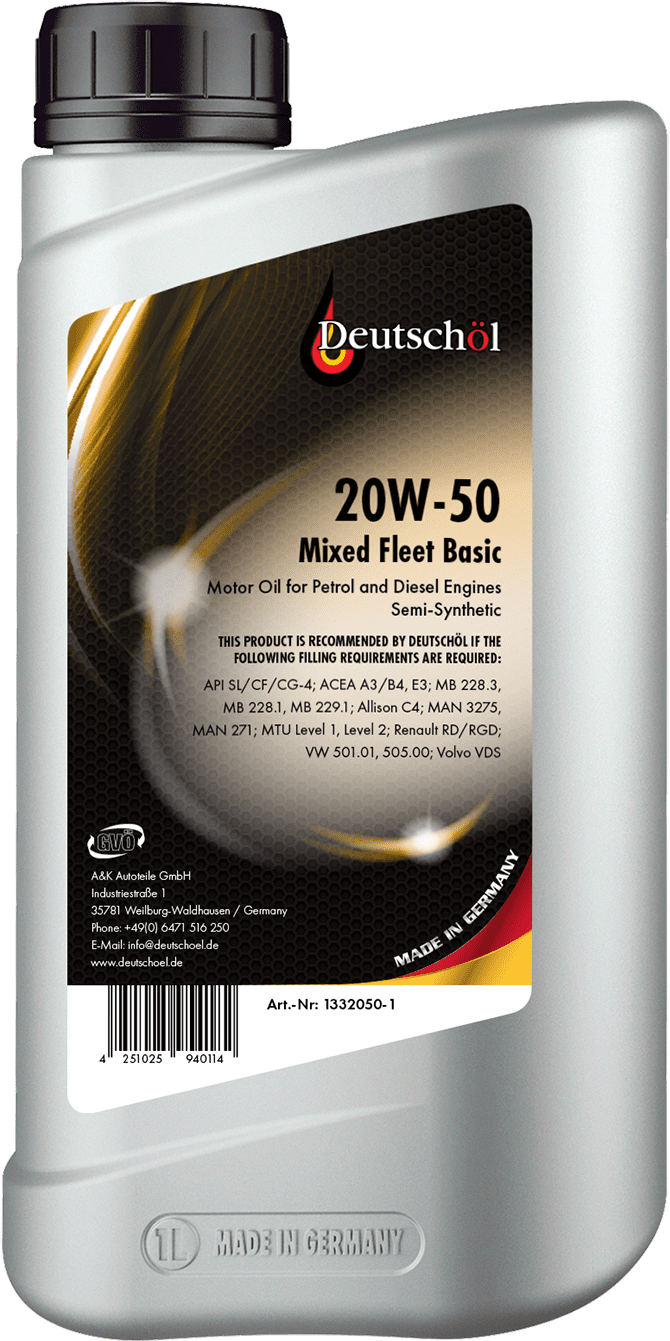

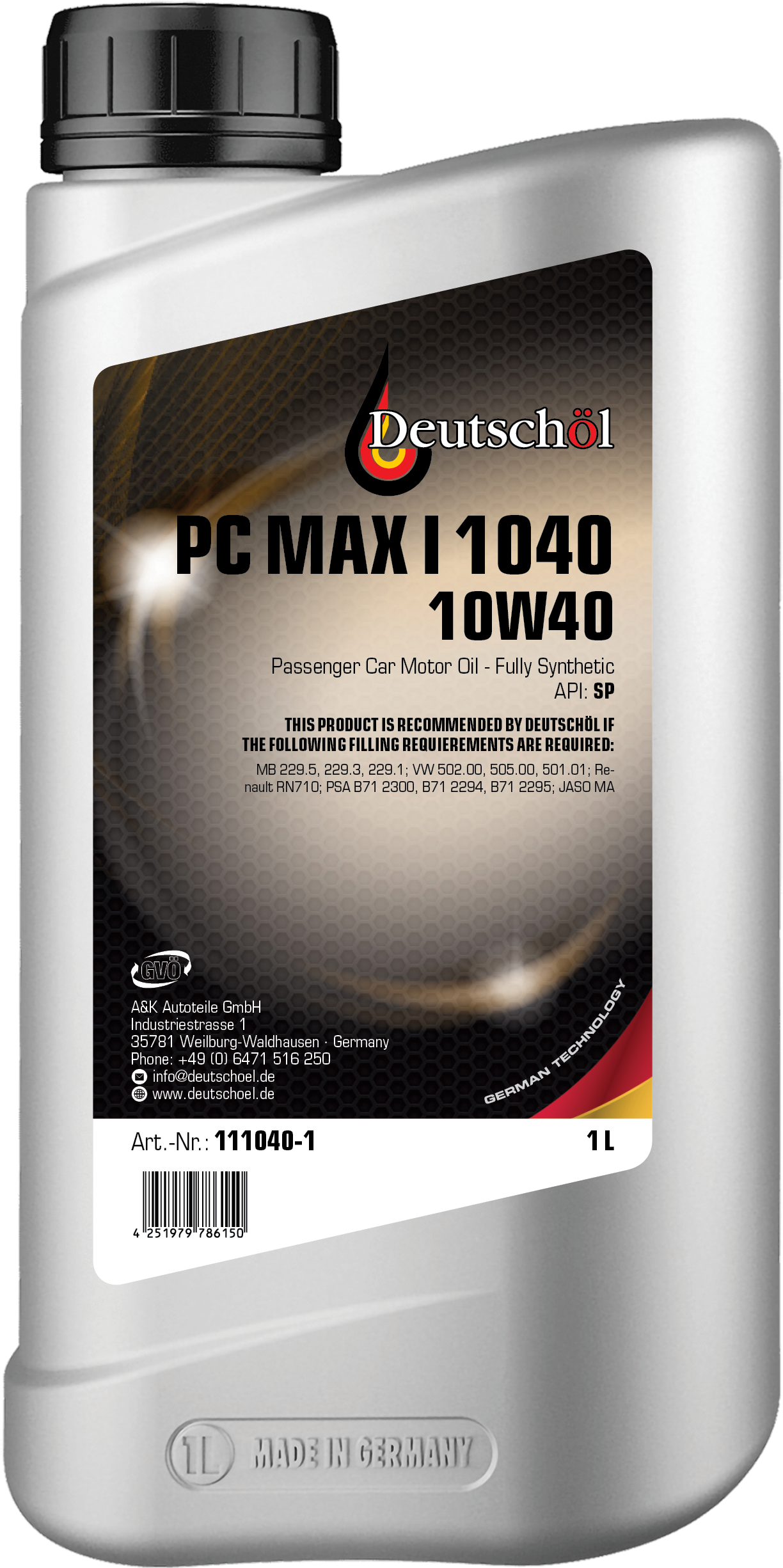
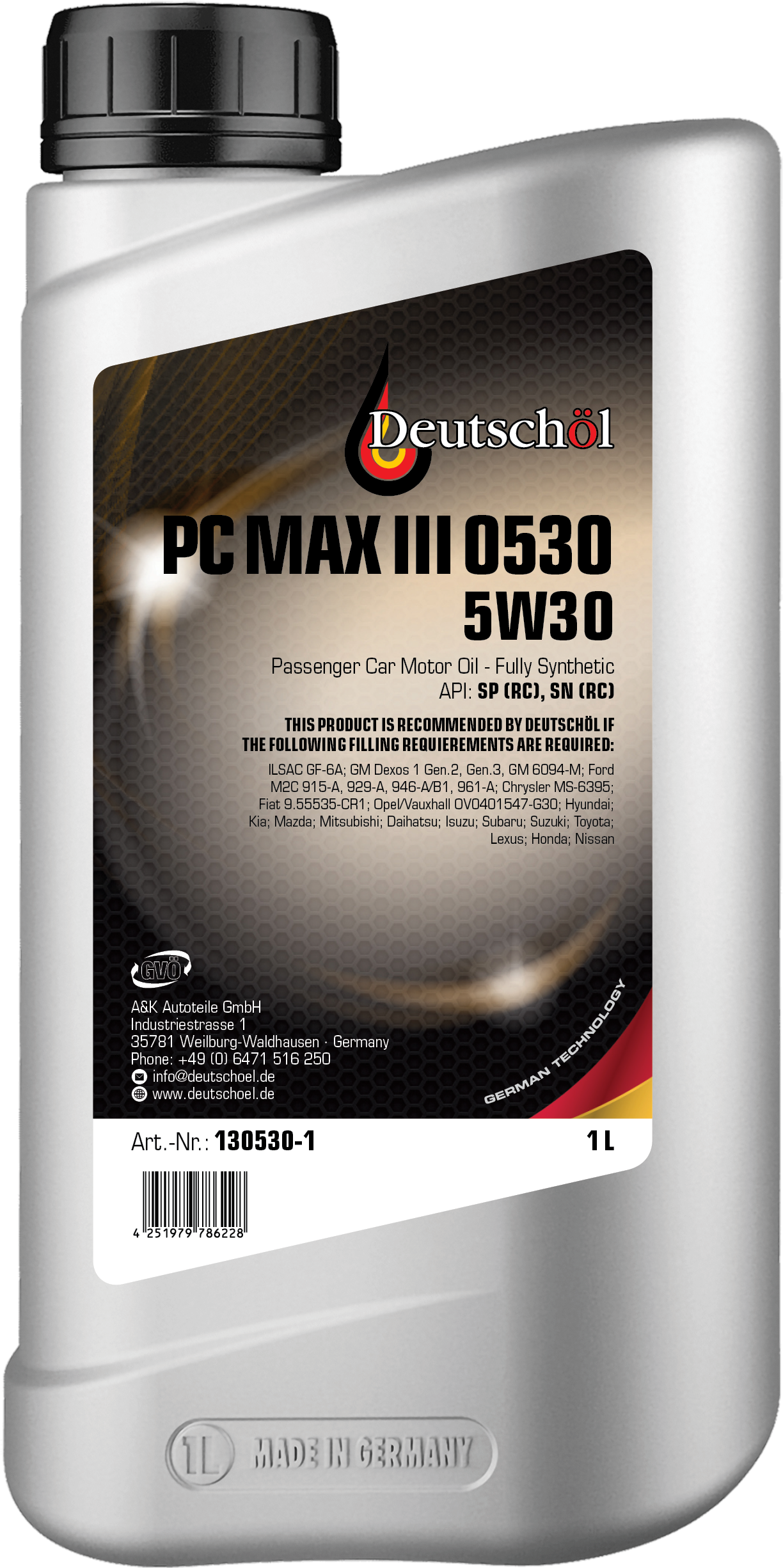
Match Engine Oil to the Vehicle, Not Just the Viscosity
Passenger-car engine oil selection now depends on far more than petrol or diesel. Turbocharging, direct injection, particulate filters, hybrid operation and manufacturer-specific service programmes can all change the lubricant requirement. The vehicle manual remains the starting point.
SAE Viscosity Is Only the First Filter
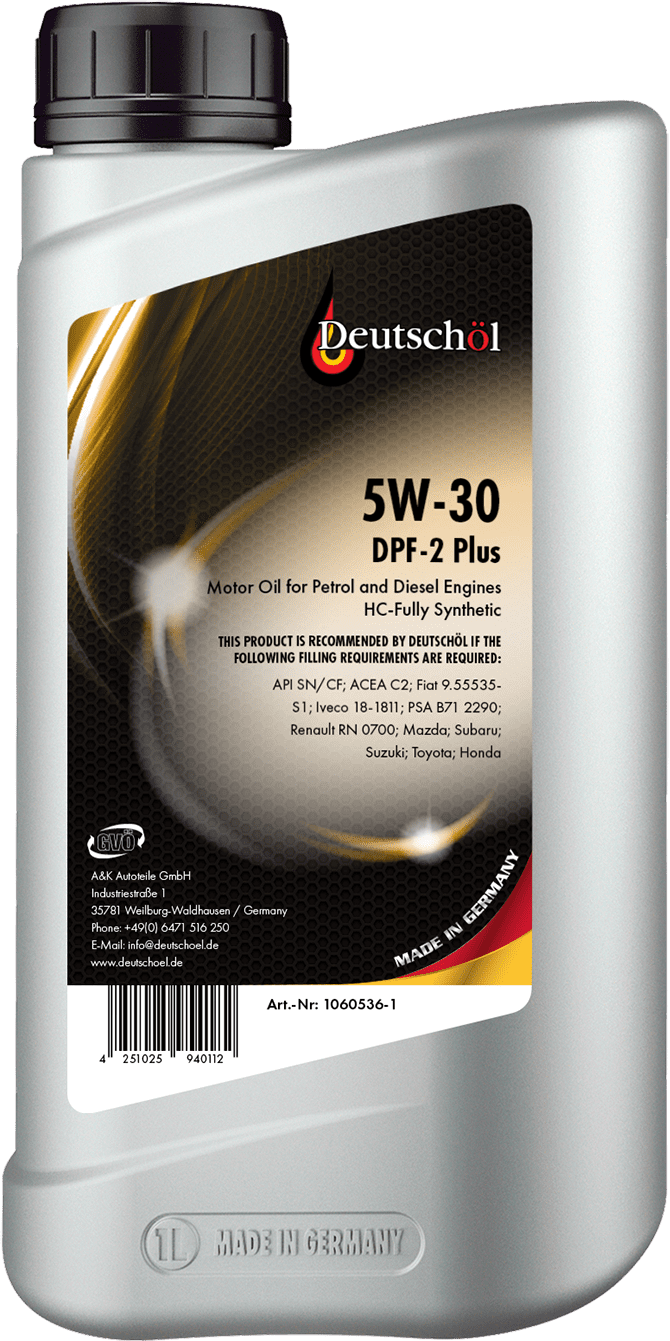
The Deutschöl passenger-car range spans modern low-viscosity grades such as 0W-8, 0W-12, 0W-16 and 0W-20 as well as widely used 0W-30, 5W-30, 5W-40, 10W-40 and heavier grades. The first number describes lower-temperature viscosity behaviour; the second relates to viscosity at engine operating temperature.
Do not move to a thicker grade because an engine is older or to a thinner grade for fuel economy unless the manufacturer permits it. Oil passages, pumps, bearings and control systems are designed around an approved viscosity range.
Performance Specifications Define Suitability
API and ACEA categories describe engine-oil performance, while vehicle manufacturers may publish their own approvals. These requirements address areas such as deposit control, wear, oxidation, fuel economy and compatibility with emissions aftertreatment.
Two oils with the same SAE grade can meet different specifications. For vehicles under warranty or operating on extended service intervals, the precise approval can be more decisive than the viscosity printed most prominently on the label.
Modern Engines Create Specific Demands
Diesel and petrol particulate filters require compatible low- or mid-SAPS formulations where specified. Some turbocharged direct-injection petrol engines require protection against low-speed pre-ignition. Hybrid engines may experience frequent starts, lower average oil temperature and intermittent combustion-engine operation.
Choose the oil designed for the engine and service regime rather than treating one technology as suitable for every modern vehicle.
What to Check Before Buying Engine Oil
- The vehicle’s required SAE viscosity grade
- The API or ACEA performance category
- Any mandatory manufacturer approval
- Petrol, diesel, hybrid and aftertreatment compatibility
- Fixed or flexible service-interval requirements
- The correct sump capacity and oil-filter specification
If several grades are allowed, consider the manufacturer’s temperature chart and driving conditions. Keep the product used for top-ups consistent with the oil already in the engine.
Why Choose Deutschöl?
German Lubricant Expertise
Performance and Protection
Recognised Standards and Specifications
FAQs
Need Help Choosing the Right Product?