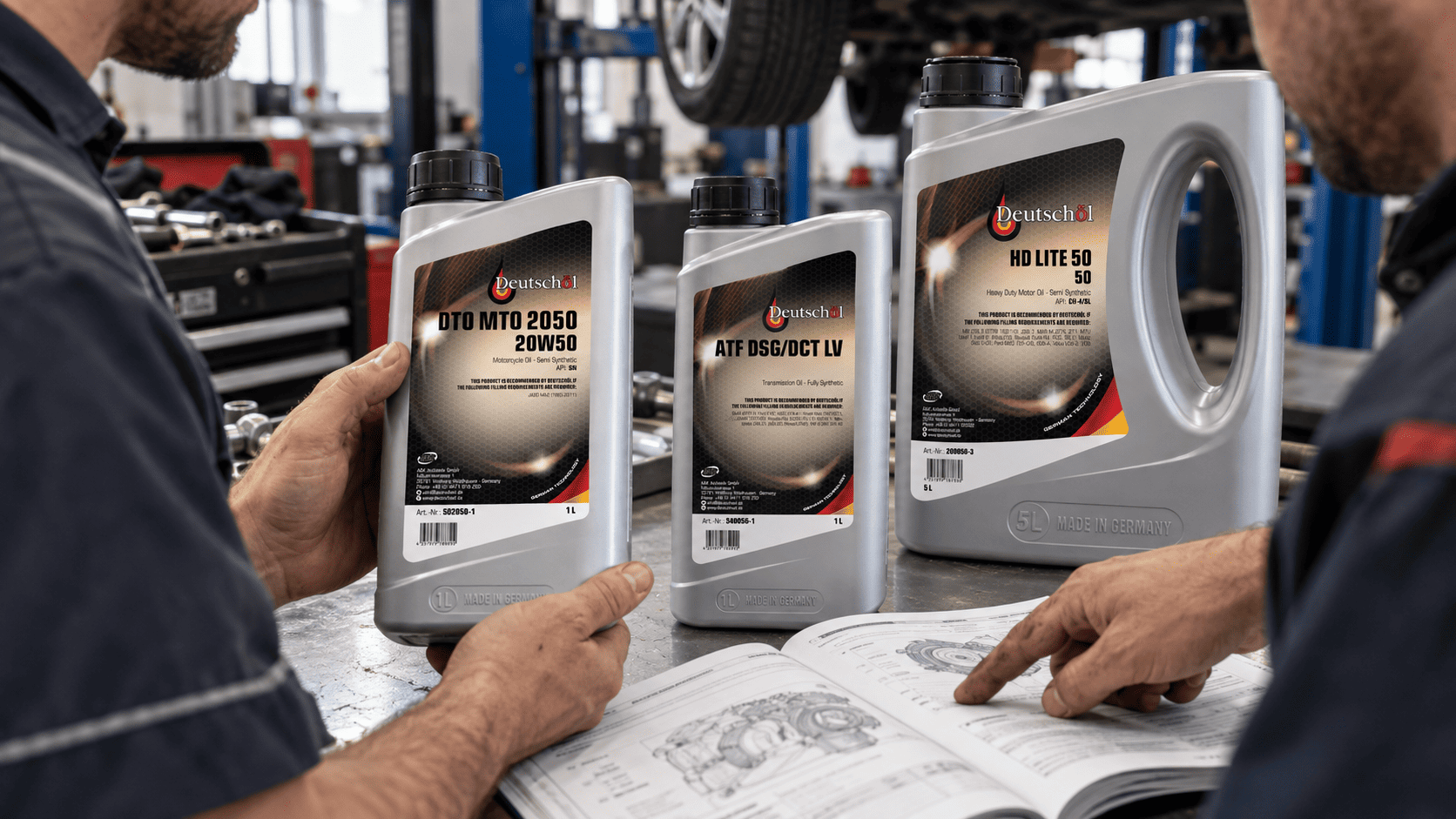
Tractor & Agriculture Oils
Available Products
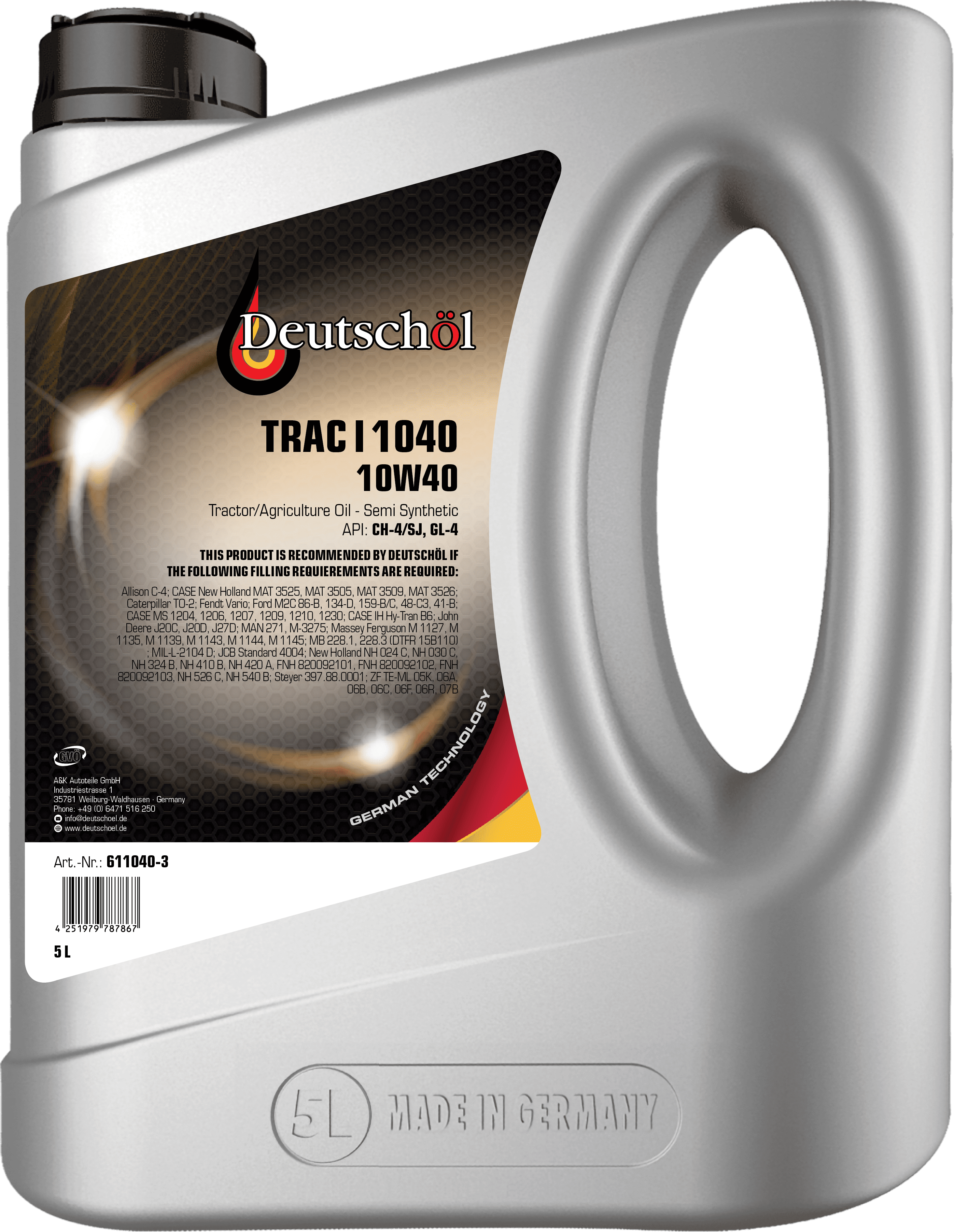
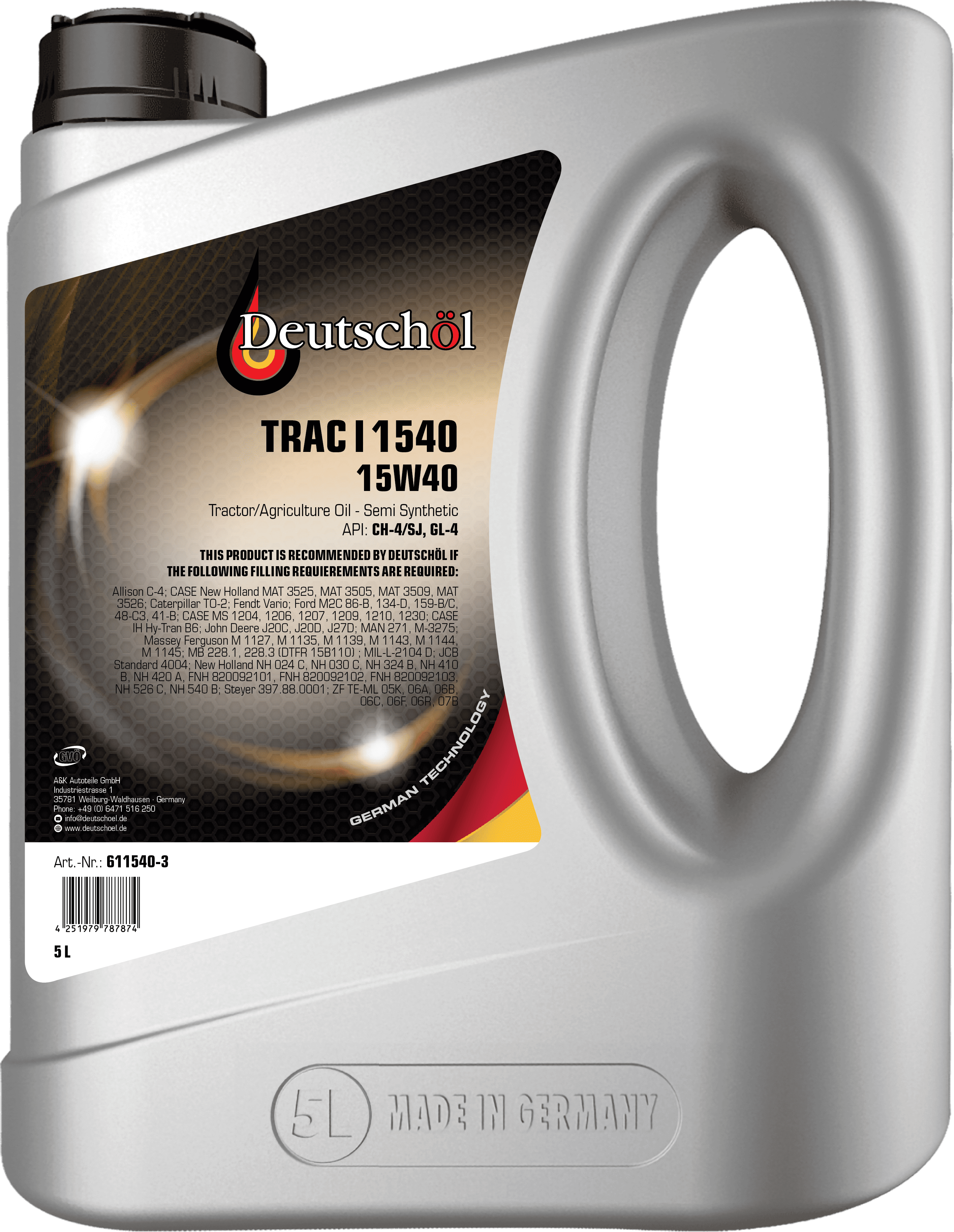
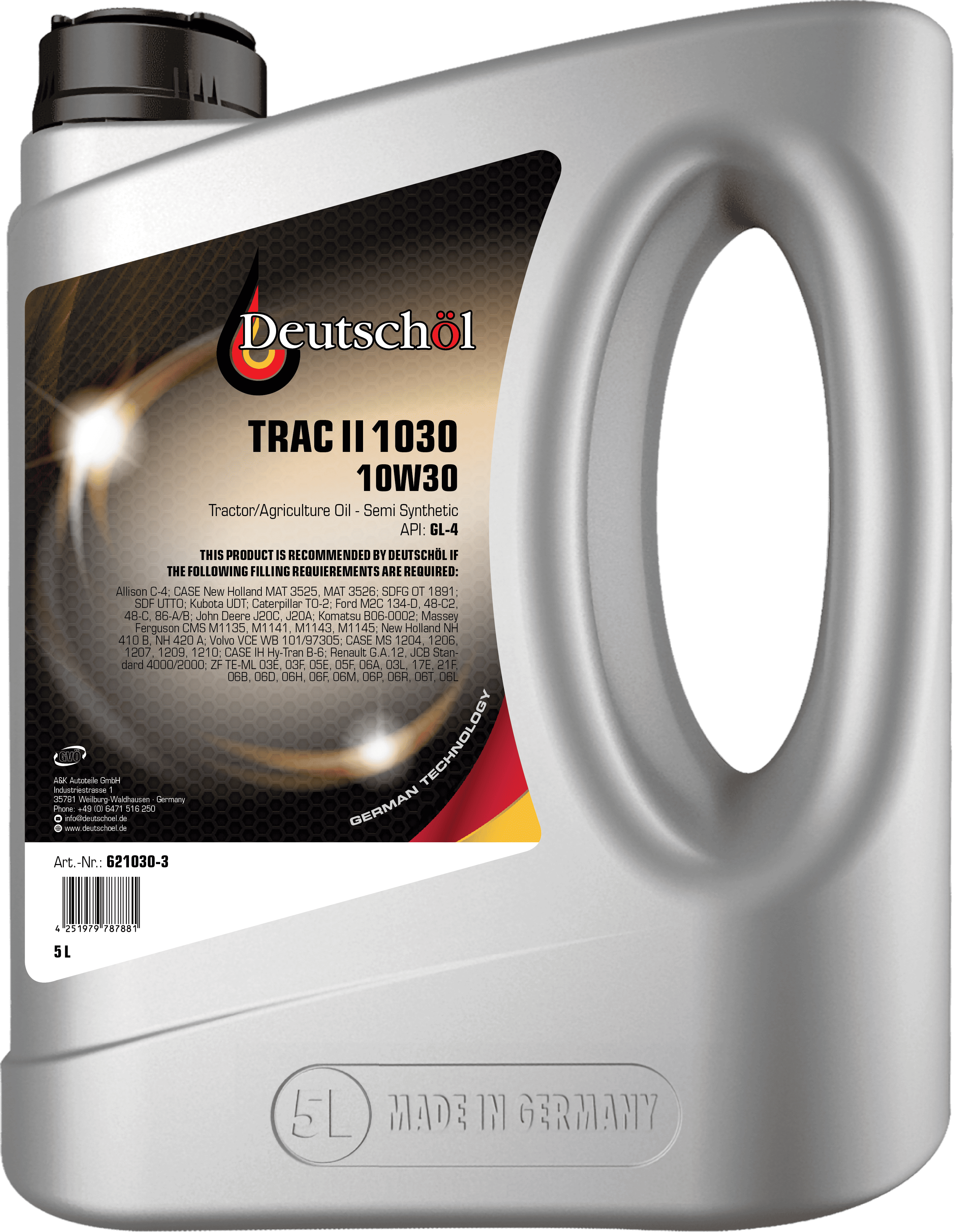
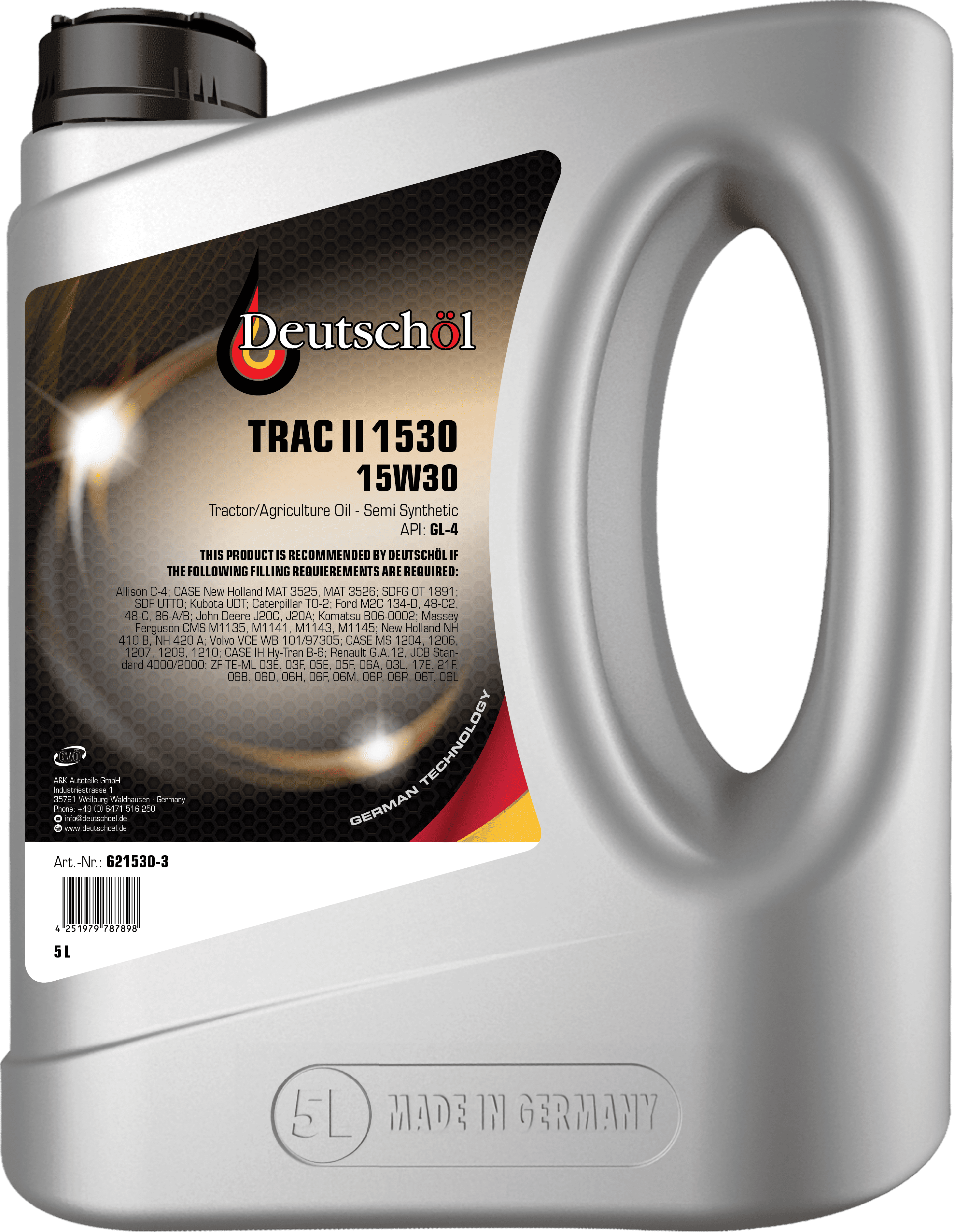
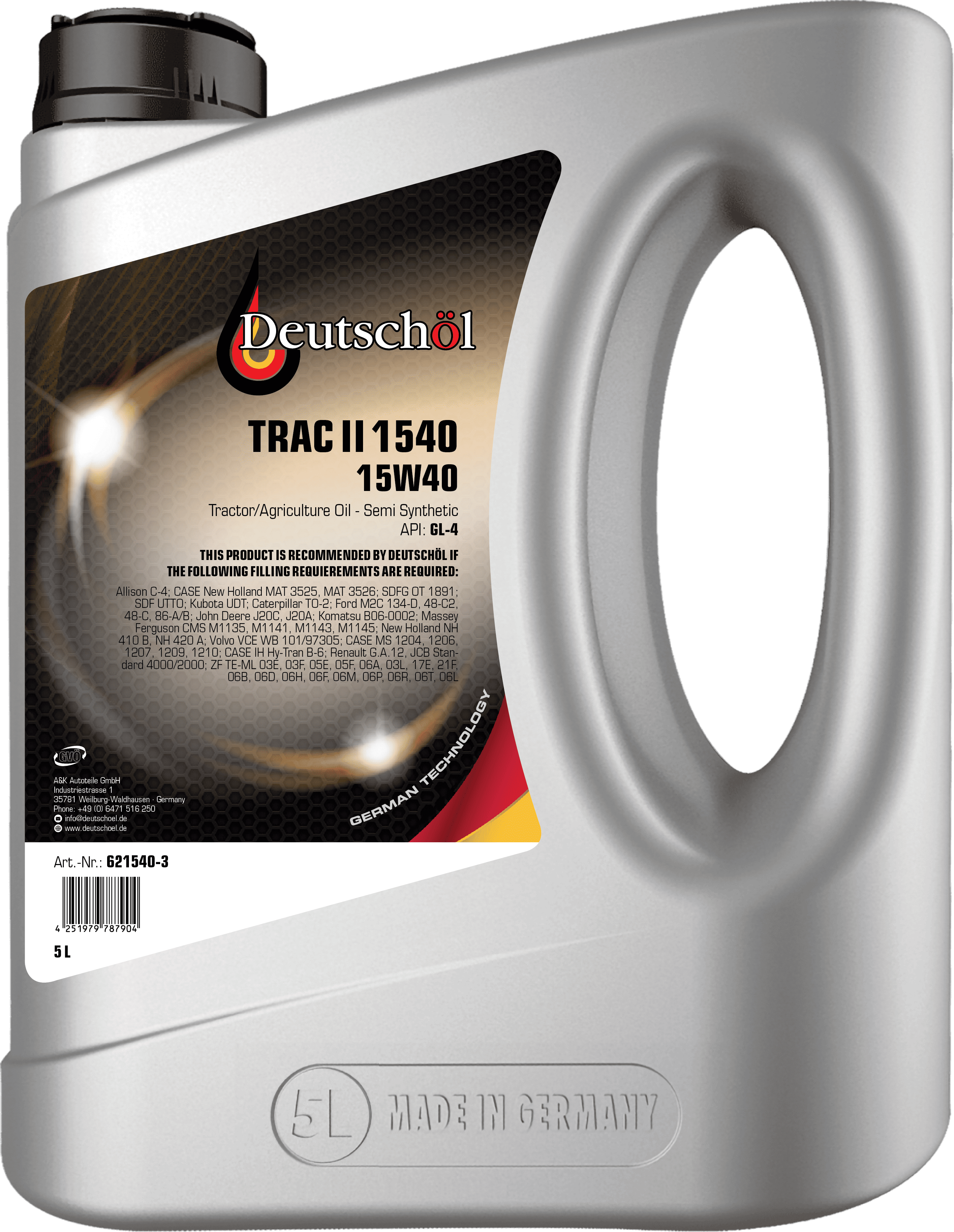
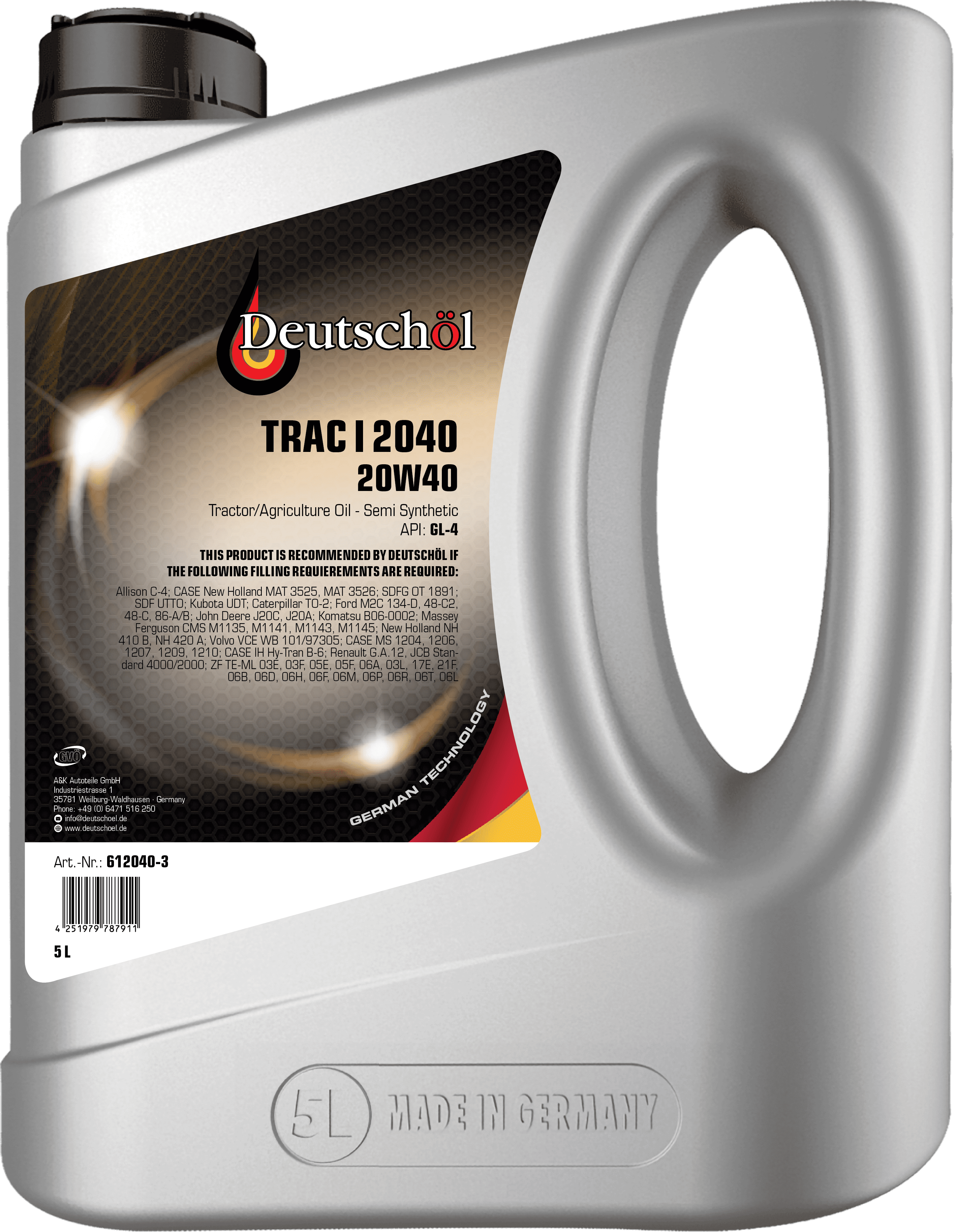
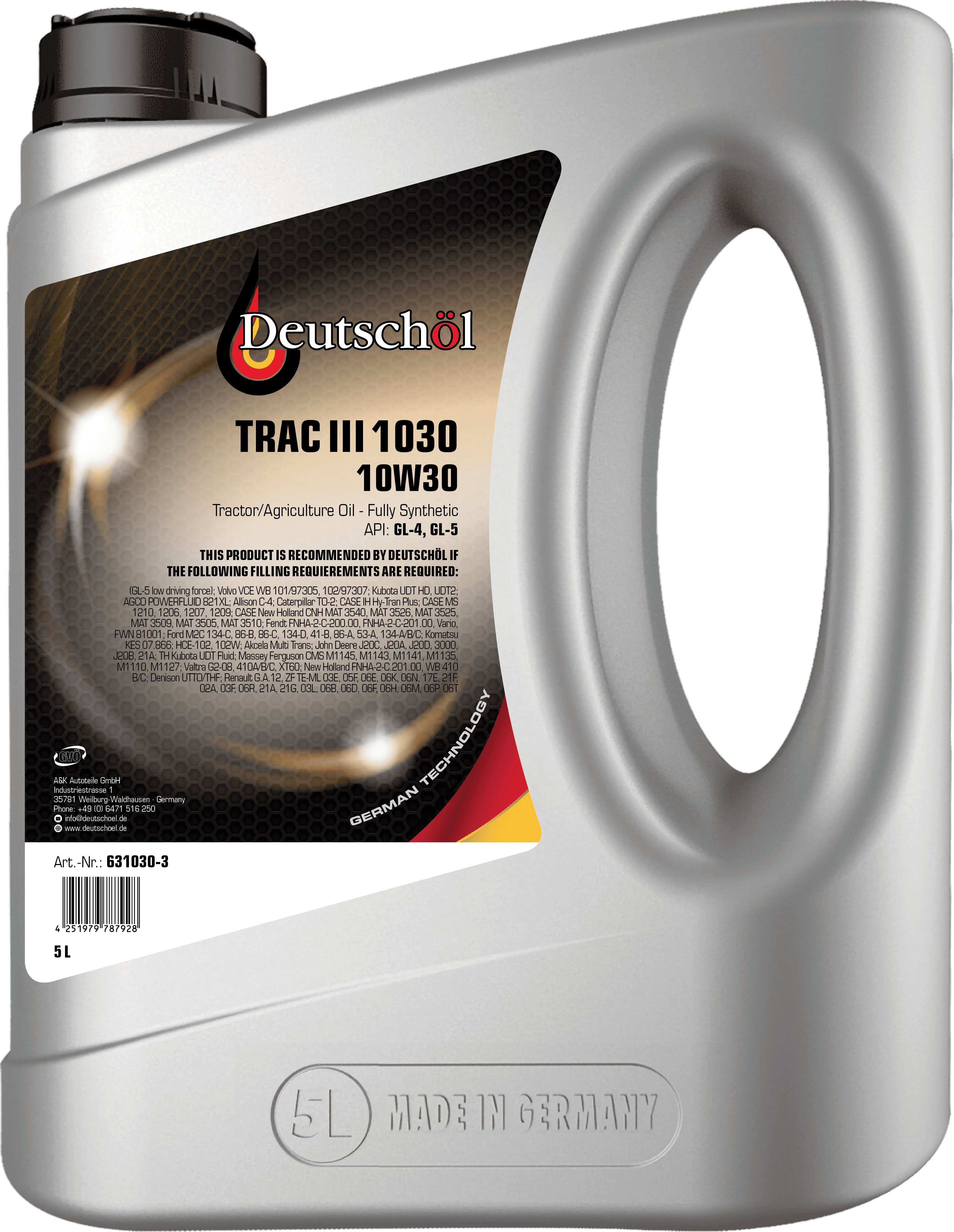
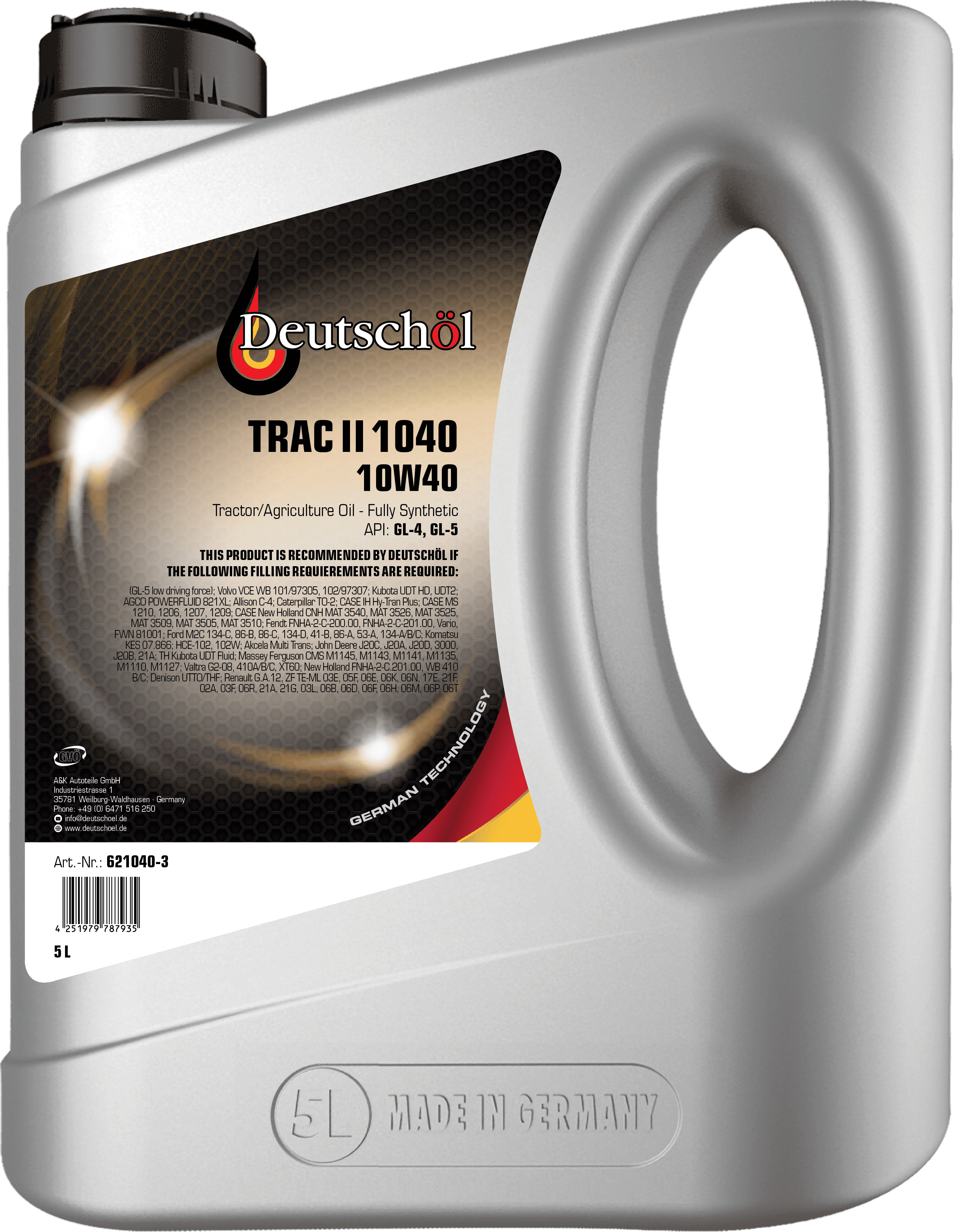
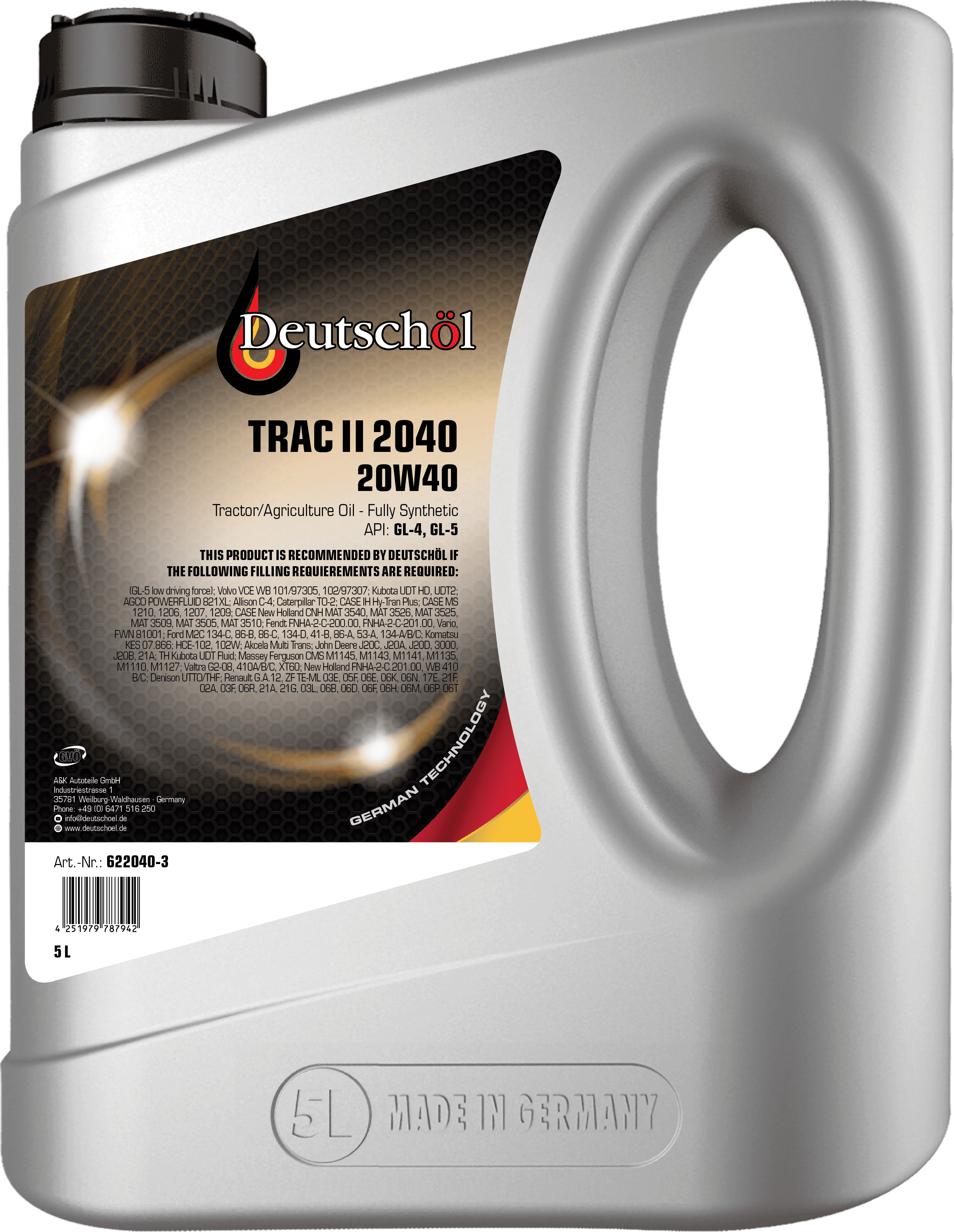
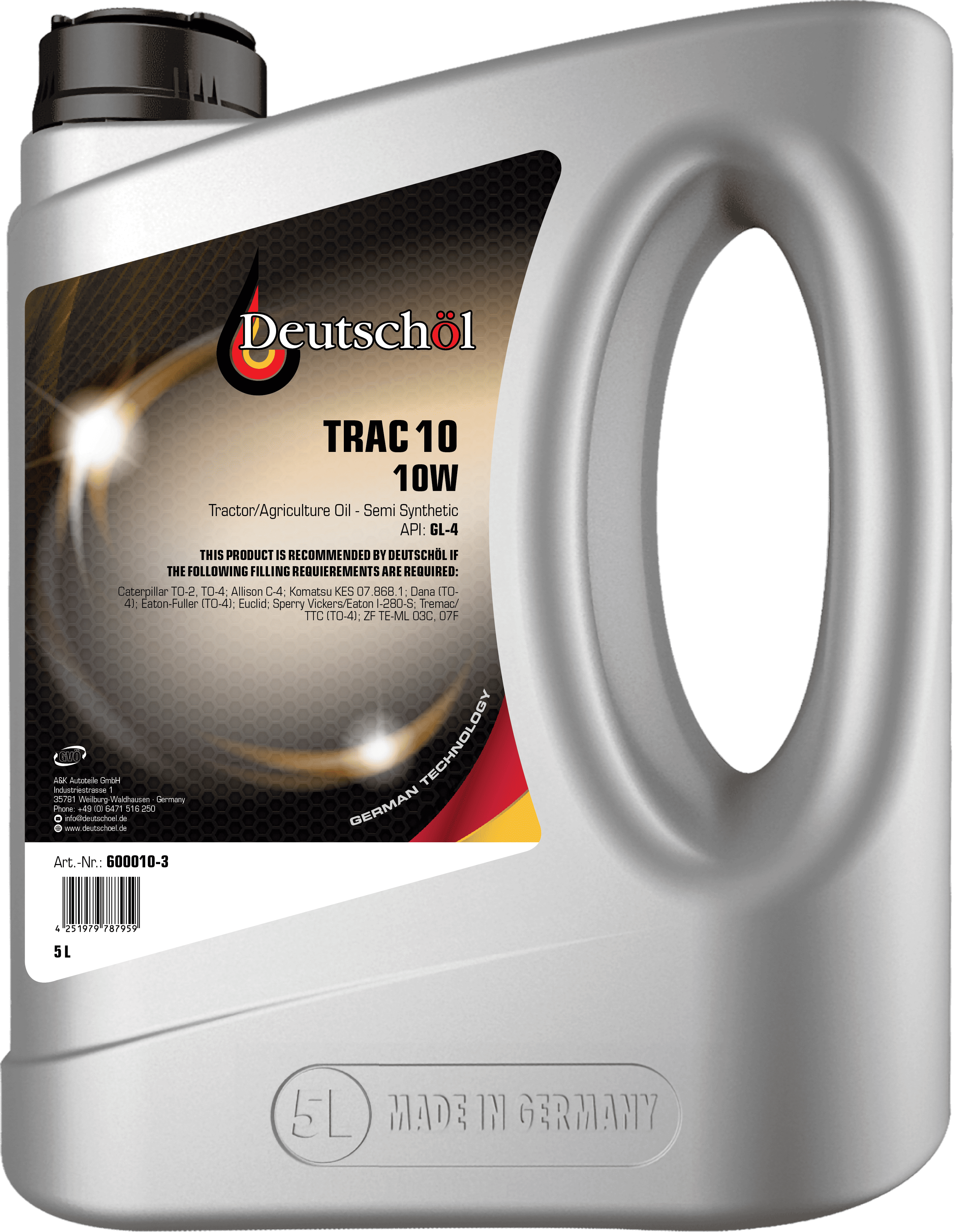
Lubrication Across Tractors and Agricultural Machinery
Agricultural machinery may use one lubricant in several systems or separate products for the engine, transmission, axles and hydraulics. The machine manufacturer determines which arrangement applies. Choosing the correct tractor oil therefore requires more than matching an SAE grade.
Universal Tractor Oil and UTTO Are Not the Same
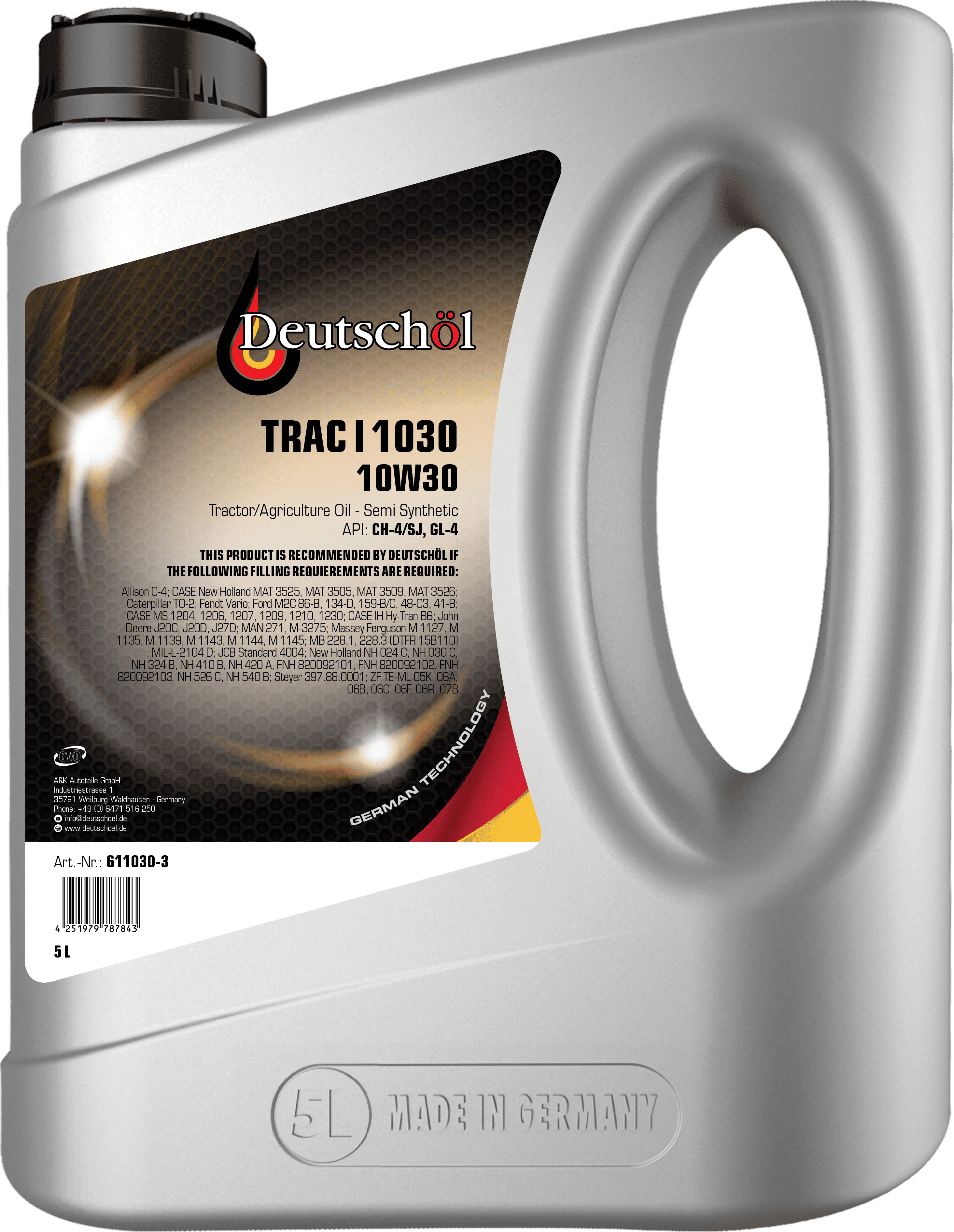
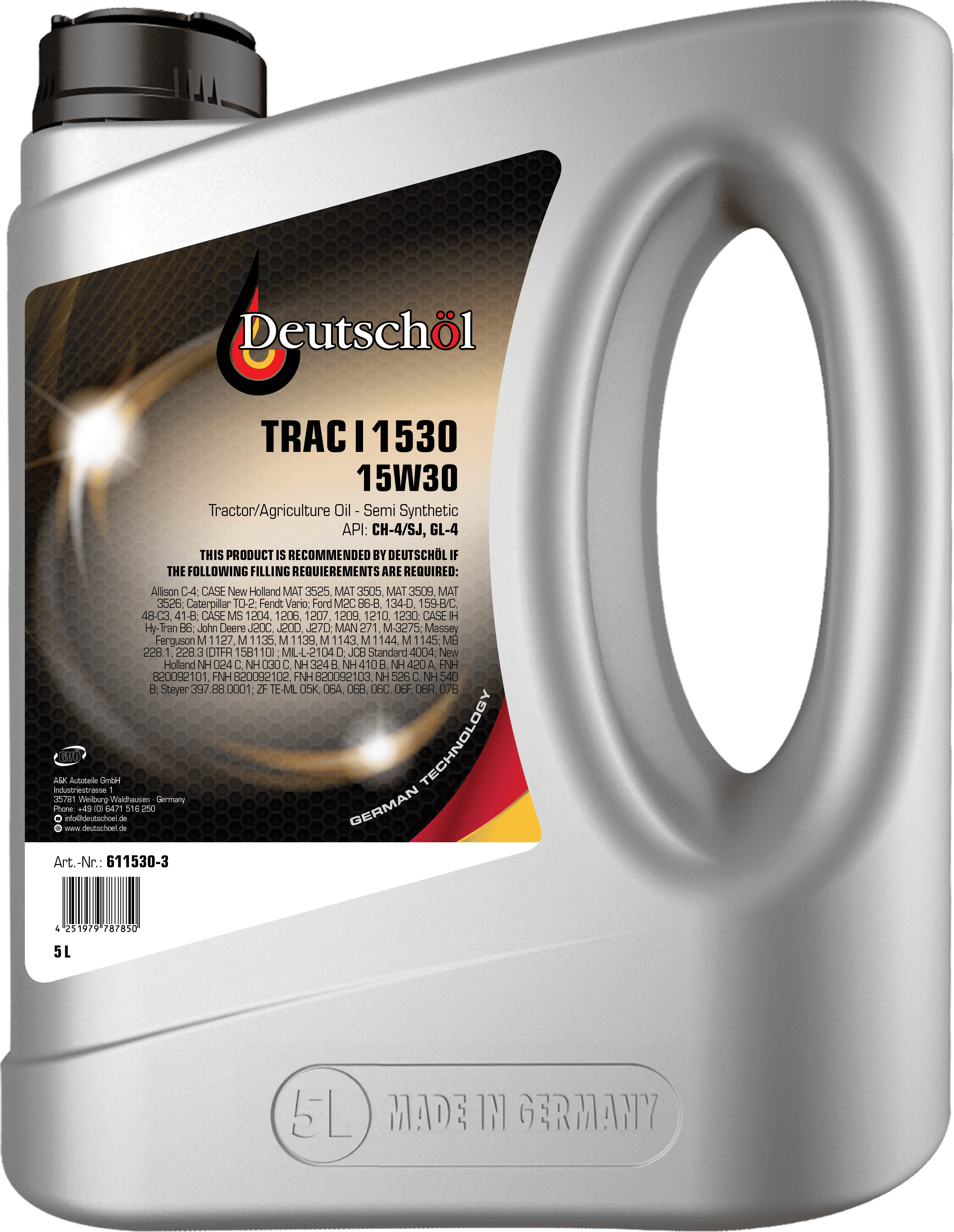
The Deutschöl TRAC range includes universal tractor oils and UTTO products. TRAC I oils are designed for tractors that specify one lubricant quality across the diesel engine, manual transmission, axle drives and hydraulic system, including compatible wet brakes and clutches.
TRAC II and TRAC III products are UTTO fluids for transmissions, hydraulics and wet brake or clutch systems. UTTO is not normally an engine-oil designation. If the tractor requires separate engine oil, using a UTTO in the engine would be incorrect even when the viscosity appears similar.
Wet Brakes and Clutches Need Controlled Friction
Tractors and construction equipment often use oil-immersed brakes and clutches. Their operation depends on the lubricant’s friction characteristics. An unsuitable oil can contribute to chatter, grabbing, slippage or poor engagement. The product must meet the machine’s transmission and wet-brake requirements, not simply a general gear-oil standard.
Power-Transmission Oils for Specified Equipment
TRAC 10, TRAC 30 and TRAC 50 are power-transmission oils for applications that call for those grades, including specified Caterpillar equipment. They can serve hydraulic, transmission, wet-brake and clutch functions where the equipment documentation permits them. They should not be assumed equivalent to a UTTO or universal engine-and-transmission oil.
What to Check for Each Machine
- List every lubrication compartment and whether reservoirs are shared.
- Confirm whether the requirement is engine oil, UTTO, universal tractor oil or power-transmission oil.
- Match the permitted SAE grade and manufacturer specification.
- Check wet-brake, clutch, CVT and hydraulic compatibility.
- Account for seasonal temperature and duty cycle.
- Use the prescribed drain interval and filter-change procedure.
Where several tractors or implements are serviced together, label dispensing equipment carefully. A single wrong top-up can affect hydraulics, friction systems or engine lubrication.
Why Choose Deutschöl?
German Lubricant Expertise
Performance and Protection
Recognised Standards and Specifications
FAQs
Need Help Choosing the Right Product?